A new transfer student always sounds exciting. Who knows what kind of person they will be and what kind of role they might end up playing throughout the school year? But when you are that transfer, it is suddenly so much more nerve-racking, especially if you are from another country altogether. Who knows what kind of people you will meet, what kind of challenges lie ahead, and what surprises await just around the corner?
Learning never begins in a classroom and will certainly never end there. There was simply so much I didn’t know. Even if I was returning to my own old home, it felt so unfamiliar and alien that I couldn’t tell if I was really finally back or if it was all in my imagination, but the cold granite floors and fresh smell of petrichor told me otherwise.
From the very start, it was very different from what I had gotten used to in the USA. Everything from the streets to the buildings showed a strong contrast and so many new things to take notice of and learn, like: how to speak respectfully, how to cross the streets, how to interact with shopkeepers, and even with fellow neighbours. From language to tradition and everyday errands, there was so much to learn, even as I went about my normal life!
When it came to schooling in the United States, schooling was more localized, with separate systems from state to state, and enrolment often tied to where you lived. That meant where you lived usually decided where you studied. Public education was widely accessible, even though there was a common pre-set standard; the experience could differ depending on the district. Schools themselves were generally divided into three separate stages: primary school (grades 1–5, sometimes including kindergarten), middle school (grades 6–8), and high school (grades 9–12). That meant you had to go through 3 schools at least to finish your school life there.
In contrast, education here in India feels more unified on a nationwide scale but also is much more layered, with different defined boards like state boards, CBSE, ICSE, etc., shaping the curriculum. Instead of being based on location, the system introduced different academic paths early on, each with its own expectations and level of rigour needed.
I also noticed many differences within the actual school. For example, the dress code in the United States was far more relaxed compared to the strict discipline of crisp uniforms in India. Most students in the U.S. were allowed to wear anything that fit within a respectful dress code. We were also provided a very large and generous library, and a huge gym hall for P.E classes. Lunch was a period which took place within the lunch hall, a completely different room you had to travel to. But snack, as usual, happened in class. After every lunch break, we were given 15-30 minutes to play, depending on how fast we finished lunch. Students could bring food from home, termed as “cold lunch”, or get free food provided by the school, termed as “hot lunch”.
Another major difference was the usage of smart devices; believe it or not, they have no textbooks at all except for books which could optionally be referred to in the library. Instead, they provide a uniform device like an iPad for grades 1-5 and a Chromebook for grades 6 and above. They allowed us to take it home to complete homework and pending assignments.
Instead of relying on textbooks and notebooks, we completed assignments through educational platforms like Google Classroom and Google Docs, along with apps like ALEKS for Math and Sora for reading e-books. All progress and finished tasks were recorded in the above, and they played a great role in tracking your academic performance. We made multiple different kinds of projects and presentations, often gathering information from resources like Britannica Online or library books during school hours. Written assignments were few and usually stored in personal binders, with optional rough notebooks for practice.
Teachers also had access to a wide range of smart tools to help us learn—smartboards, projectors, and a computer monitor were present in every classroom. As a result, we became very comfortable with online platforms during the transition to online education in the COVID-19 quarantine. For too much troublemaking, you were given detention where you sat apart from your usual class and friends, instead spending your time repenting in a mostly empty teacher-monitored room in silence.
As I came to middle school, the equipment only diversified. The cooking room had four small stations where we worked alongside our batchmates, the music room had soundproof walls and an array of unique instruments to choose from, and the woodworking section featured heavy machines, which could be dangerous if not used properly, as well as a 3D printer. It was all so fun and interesting to work with and learn about!
This brings me to subjects. Unlike in India, where your subjects depend on the board you are affiliated with, the core classes in the U.S. were Math, Science, English, and Social Studies. In addition, practical classes like music, art, woodworking, programming, and Family and Consumer Sciences, which included cooking and babysitting, all of which were mandatory in the first year of middle school (6th grade), so you could decide which you would like to pursue in detail as you go on later in years.
Well, 6th grade was also when I left, and before I left, I learned the basics of how to play the flute, cook, and even earned a babysitting license in Home Science. I also learned clay modelling, basic pottery, and how to safely operate large machines and create simple 3D-printed key chains. On top of that, students had a close rapport with teachers, usually not afraid to ask for a little help, and sometimes even small errands.
In contrast, India relied on strict discipline and respect for teachers, which too could develop into a close bond, but of course, different from the one mentioned above. Also, the usage of written work is much higher with almost no integrated technology within the expected school, but of course, this varies from school to school. There were no concept-based written notes called ‘Classwork.’ As a result, I had to face the consequences of my lack of writing practice in America. What I meant was that I unfortunately possessed horrendous handwriting, which needed rigorous analysis for anyone who wished to comprehend my manuscripts.
You can imagine by this how much of a nightmare I must have been to the teachers without the need to become any kind of troublemaker or class clown. However, contrary to my intentions, I ended up becoming a kind of class clown in its own way, not one that made jokes but one that got laughed at anyway. Why, you ask? The USA had given me an accent which was so different that it had the effect of being completely confusing, or oddly awkward, or a mix of both. This then led to a weird silence of “Hey look, the new guy with a queer accent is talking!” every time I tried to ask a little doubt or speak out my confusion, after which everyone would either start laughing or start a debate on translating exactly what I meant among themselves.
I also had a major issue with my mother tongue as a subject. You see, although I spoke it at home for years, I didn’t know the first thing when it came to writing and reading the language, which is exactly what I was expected to do in the exams. However, with the patient guidance of the kind teachers and support of my dear friends and family, finally, after a two-year struggle, I got a good grip on legible handwriting and also achieved some decent marks in all my weak subjects.
Truly, without the help of the entire school, I wouldn’t have been able to make it through the rough terrains of a new country and a new system of education. I am truly grateful to the manager, principal, the entire staff, and my dear classmates, of Christ the King public school. I cannot express the crucial role they played in my school life here. If I had the choice, I would relive all the wonderful experiences I had in my student life all over again.
I hope this brings new insights about a country far apart across the sea but close in the goal to make students who are not only big dreamers but also big achievers! After all, no matter the differences, we are all the same creatures at heart.
Divith Krishna Padmanabha
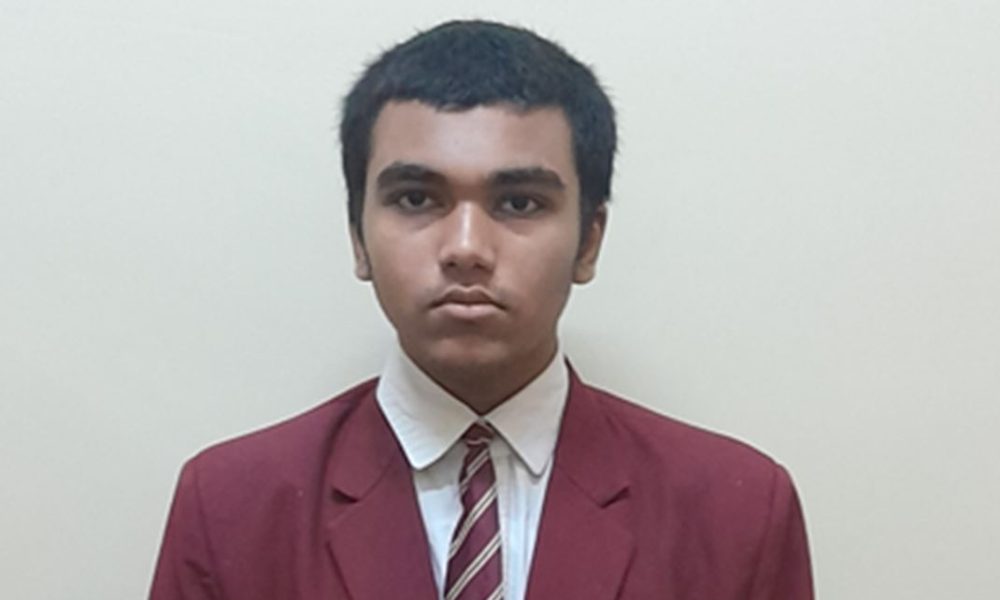
Batch of (2025-26)
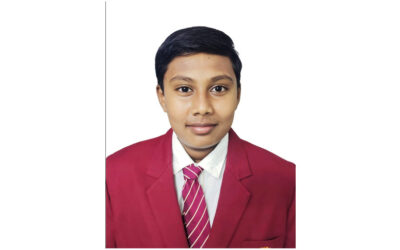
<< Divith completed his schooling up to Grade 6 in the United States before relocating to India in 2022. He then joined Christ the King Public School in Grade 7. While he cherishes fond memories of his life in the US, he adapted smoothly to the Indian education system. In this article, he expresses his gratitude to all those at the school who guided and supported him during the transition.
He is passionate about Mathematics, Physics and solving puzzles. His other interests include writing and sketching. >>